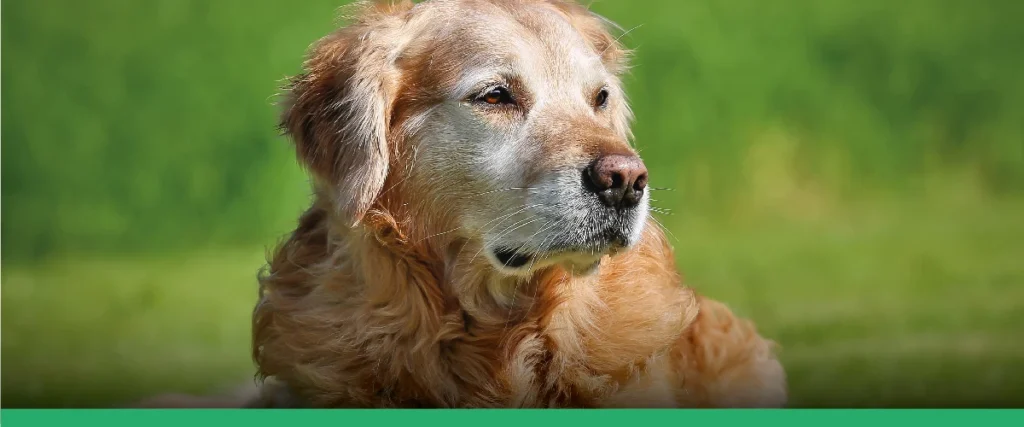
Over the years our senior dogs stop behaving the same way they did when they were younger. Some problems may start to arise and trips to the vet’s office should become more frequent.
Several signs indicate that the animal is aging and you, as a tutor, are concerned about providing your pet with quality of life.
But this is also new to you and the concerns are many, aren’t they? How do I know if my dog is old? What should I pay attention to? What changes in care? How can I ensure that my pet lives this phase with a better quality of life?
We understand your concern and, therefore, Vetnil® has prepared some care tips for your elderly dog. Check out!
Before start thinking about what care we should take to ensure quality of life for elderly animals, it is necessary to pay attention to the signs of aging.
How do I know if my dog is old? This answer depends on several factors, including size and breed. Small dogs are usually considered seniors from the age of 12. As large dogs, from 9 or 10 years old. However, there are exceptions to these age groups, so it is important to evaluate other factors together.
There are some signs that animals can show that indicate whether they are close to this phase. According to veterinarian Maria Alessandra Martins Del Barrio, specialist in Feline Medicine and Veterinary Geriatrics, some of them are:
1 – Appearance of white hair;
2 – Stronger smell, especially on the breath;
3 – Difficulties in locomotion;
4 – Compulsive behaviours, such as walking in circles;
5 – Excessive tiredness and drowsiness;
6 – Difficulty in seeing and discomfort in dark environments;
7 – Hearing problems;
8 – Greater sensitivity to sudden changes in temperature.
Although the signs mentioned above are more common when dogs reach maturity, Martins Del Barrio explains that some of them can start to appear at the mature stage, that is, from 7 years of age in small dogs and from 5 years of age in large dogs.
The important thing, reinforces the veterinarian, is that, as soon as the signs begin to appear, the dog should visit the veterinarian.
With changes in behaviour and habits, new needs arise to take care of your dog. Thus, it is the responsibility of the tutor to pay attention to these changes and seek to make adaptations to continue providing quality of life in canine maturity.
Thinking about it, Vetnil separated some special care to have with your elderly. Follow up!
Nutrient intake by dogs can decrease as they age, but physical activity can also decrease, in addition to a few other changes that happen in an aging dog that can influence the amount of energy and nutrients he will need to receive. Therefore, it is necessary to check and possibly change some eating habits.
It is always important to consult your veterinarian so that he can guide you on how to change your dog’s diet. Only professional will be able to evaluate and understand all the changes that arise with aging and especially check which changes your dog is going through. Overall, the main recommendation is to offer balanced foods for this stage of life.
Thus, some nutrients gain greater importance in the elderly, and it is important to supplement them, such as inositol, choline, vitamins, omega 3, chondroitin sulfate, taurine, prebiotics, probiotics, etc.
With age, problems such as arthritis, arthrosis and joint disease can begin to surface. For this reason, elderly dogs may have reduced mobility.
There are treatments to improve the quality of life of dogs that suffer from this type of problem, however, tutor play a key role in adapting their dogs’ space to provide them with more comfort.
Thus, keeping the bed or resting place close to your dog’s feeder and waterer will contribute to his comfort. In addition, facilitating access to the place where he needs to be is also essential. Remember that it is essential to observe how your dog walks, if he shows difficulty and how much this prevents him from performing daily activities. Any observed sign must be evaluated by the veterinarian, because the sooner the treatment is instituted, the faster and easier the recovery will be.
And if you want to know more about joint diseases in pets, veterinarian Gustavo Vicente talks about general joint care for dogs and cats.
Follow our YouTube channel for more information about caring for your pets!
Senior dogs need and exercise routine to stay healthy, but with some adaptations.
Mostly because of mobility problems and reduced energy, older dogs have difficulty moving around. However, walks and games must continue to take place so that he can interact with the environment, other dogs and control his weight, thus avoiding overweight and obesity problems.
In this sense, it is the responsibility of the tutor to provide activities of lesser intensity, quantity, and duration and whenever necessary, with adaptations, in order to keep the dog active and healthy.
Beware of temperature changes
Another change that can occur in aging dogs is sensitivity to sudden changes in temperature. Due to greater vulnerability of their immune system, older dogs are more likely to contract diseases in colder periods.
Therefore, keep the sleeping place and belongings in a well-ventilated area with direct lighting, but away from wind currents.
With advancing age, dogs may no longer be willing to interact with other animals. In addition to getting more tired, many have mobility problems and having a young and very excited puppy around can make them irritable. In addition, older animals may have a harder time adapting to new situations, whether it’s a change of environment o the arrival of a new family member. Therefore, any changes, if necessary, must be made gradually, respecting your pet’s new adaptation period.
All the care tips that we have just given you are extremely important to maintain your dog’s quality of life during his older age. However, nothing replaces the follow-up of a veterinarian.
Senior dogs need a lifestyle change, but everyone has different needs. Thus, only a qualified professional can make the specific recommendations that your animal needs.
Therefore, when you notice that your dog shows signs of aging, visits to the vet should become more frequent. In-office examinations and evaluations must be carried out at least every six months to ensure that your pet’s health is monitored, and other conditions or diseases that the pet may have may require follow-up at shorter intervals, especially if there are any continuous use of a drug.
Did you like the content? Share with those who also have an elderly dog and need to pa attention to care. And if you want to receive more pet tips, follow our Instagram page @vetniloficial.
Av. José Nicolau Stabile, 53 – Burck | Louveira – SP – CEP: 13294-100 | vetnil@vetnil.com.br
Copyright © 2025 Vetnil - Partner who Cares | All Rights Reserved

Bem-vindo a Vetnil®
Usamos cookies para
melhorar sua experiência.
Nós guardamos informações técnicas e analíticas do seu acesso e navegação em nosso site.