We know that there are necessary and specific care with equines and one of them is the hoof trimming. But do you know the importance, the main care and how this procedure works?
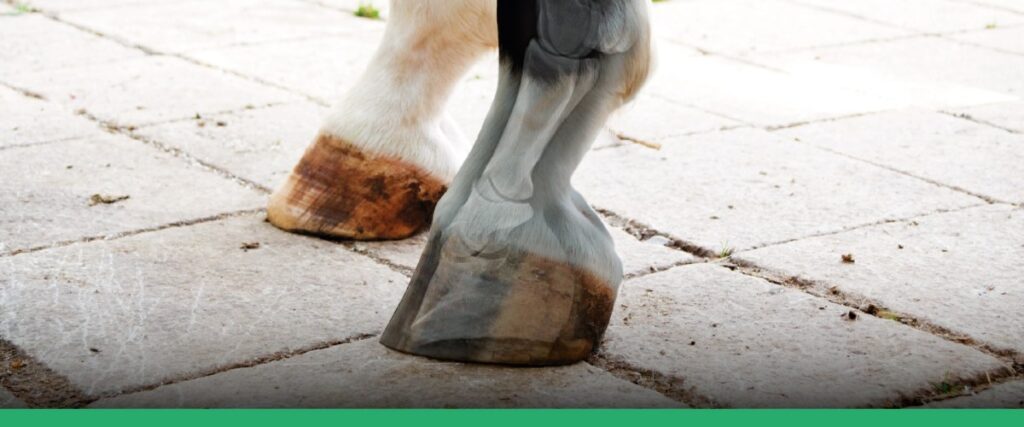
The horse’s hoof is nothing more than their base of support, directly interfering with their health, balance, uprightness, and locomotion. That’s exactly the reason why the hoof trimming is so important!
Among the main function of the hoof are:
Find out more about hoof trimming with Vetnil. Follow up!
The horse, like any other equine, has a base support on the ground, ensuring that its body weight is well distributed, which, in ideal conditions, makes the horse position all four limbs vertically to the ground, ensuring perfect support and balance, both in station and in motion. Thit is known as aplomb.
When the animal presents defects in its aplomb, its hoofs suffer premature and irregular wear, impairing its locomotion, resistance, and balance.
Some causes of aplomb defects are:
And it’s worth remembering: animals don’t always have perfect aplomb. Therefore, it is very important to do a good trimming, with care and quality. That means trimming the animal’s hoof, based on proper techniques and parameters.
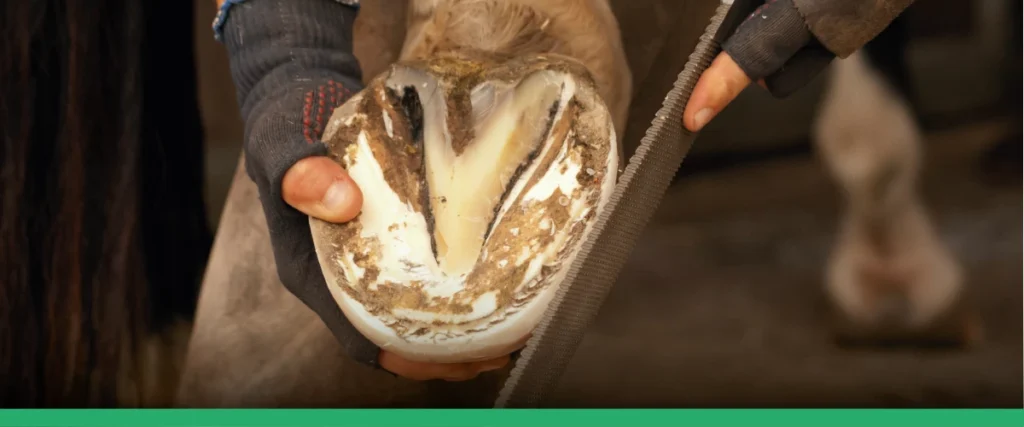
First, it is necessary to assess the situation of each of the hoofs, looking at them from above, front and back – both with the animal still and in motion, always on a flat and hard surface. After that, it is necessary to evaluate the plantar surface of the hoof, in addition to cleaning this area.
Then, focus on the frog, which must be cleaned and aligned with the rest of the hoof, cutting the excess part, very carefully. It is known as the hoof’s heart, in a triangular shape, located in the centre of it, and has the function of cushioning the impact with the ground, in addition to assisting in the blood supply to the interior.
After cleaning, the person responsible for trimming makes a detailed analysis of the hoof, checking for injuries, drills, or painful places.
Then, the toe is trimmed, the contour of the withe line is adjusted (junction between the sole and the wall of the hoof) and the excess of the wall is removed. In addition, the sole and the wall are levelled, as well as the rounding of the hoof contour.
It is essential to be very careful in this process of adjusting the wall, when cutting it around the white line, since if it exceeds its limits, reaching parts of living tissue, the horse can feel a lot of pain and have damages in its locomotion, in addition to more serious problems.
Finally, the last part of the work is carried out – the finishing, done with the rasp and application of a sealer.
During the process, the person responsible for the trimming must pay close attention to the levelling and angle of the hoof, which is extremely important, as it is directly linked to the animal’s body structure.
It is important to remember that no hoof is the same. Each one has its way of growth, its respective deviations and unique adjustment. Therefore, there is no recipe for trimming, and it must be performed by a professional in the area, who has the necessary knowledge. In addition, it should be performed every 4 or 6 weeks.
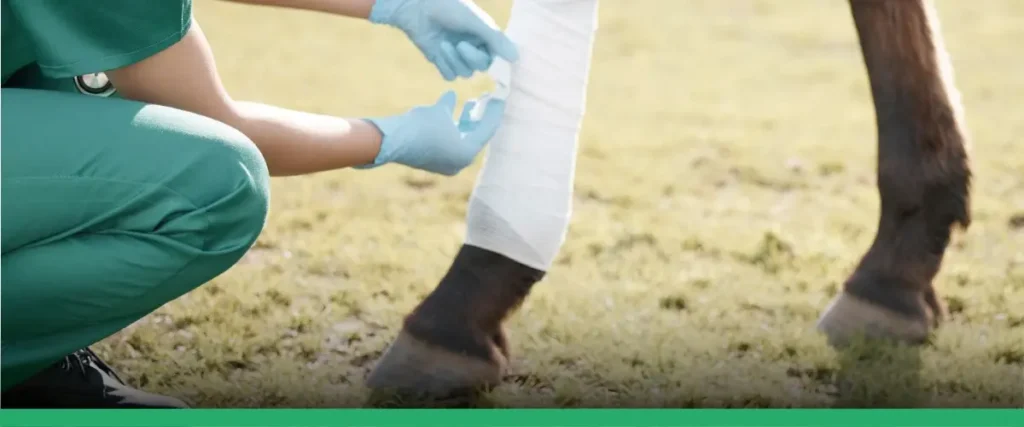
Having the support of professionals in the area, as well as the follow up of a veterinarian for your horse is extremely necessary. Do not leave this concern aside, and always count on the care of those who understand your animal.
Exist two types of trimming, preventive, and the corrective.
The maintenance trimming, due to the normal growth of the hoof, turns out to be preventive, as it provides the horse with well-being, avoiding possible pain and lameness due to the unevenness that may appear, in addition to preventing the occurrence of more serious disease, arising from this growth, which would occur without proper care and maintenance
The corrective trimming helps correct trim and needs to be started at 2 months of age in horses that have severe deviations. In animals with subtle deviations, trimming can be started at 4 months of age.
It is worth mentioning that the chances of successful hoof correction are much higher if performed up to 9 months of age, because at this age epiphyseal closure begins to occur. Then, after this period, the cartilages, which were previously soft and easy to mold, become more rigid and less malleable
The incorrect trimming can bring numerous damages to the animal, such as:
That said, here are some trimming mistakes that can be avoided if performed by a qualified professional
Over-cleaning the sole of the hoof can harm the horse, making its walk uncomfortable and painful.
The extension of the walls compromises the support of the horse since they have the function of directing the weight of the animal to the peripheral part of the hoof. This error can contribute to the narrowing of beads and bulbs.
By disregarding the angulation between the hoof and digital system and not observing the anatomical conditions of the horse, the sole is compromised and overtime, becomes thicker and less flexible, losing the ability to absorb impacts efficiently.
In addition to all the care in the maintenance, prevention and correction of hoofs already mentioned, it is worth highlighting the importance and impact of adequate nutrition for its proper development, especially of some nutrients. Among them, we can mention biotin, which helps in keratinization, in the synthesis of the extracellular matrix, in elasticity and resistance; methionine, which is a sulfur donor and participates in the formation of skin tissues; zinc, which improves hardness, impacting resistance and increasing hoof and hair growth; and lysine, which participates in collagen synthesis and is part of the structural proteins of the skin, hair and hoofs.
If you are looking for a professional to perform the trimming of your horse, it is essential that this person understands the animal’s anatomy, as well as the equipment and the step-by-step procedure.
In Brazil, those who wish to follow this profession have the option of taking free courses focused on the area. A few certificates can certainly make a difference!
Did you like the content? Share and keep following Vetnil’s content, the partner of those who cares!
Av. José Nicolau Stabile, 53 – Burck | Louveira – SP – CEP: 13294-100 | vetnil@vetnil.com.br
Copyright © 2025 Vetnil - Partner who Cares | All Rights Reserved

Bem-vindo a Vetnil®
Usamos cookies para
melhorar sua experiência.
Nós guardamos informações técnicas e analíticas do seu acesso e navegação em nosso site.