Skin wounds are frequent in horses, whatever their stage of life. Its implications for athletic horses are even greater. According to a study carried out with the purebred English breed, 7% of the injuries that lead to the early retirement of these animals are associated with injuries. Therefore, it is importan to know how to take care of these cases, using, for example, a healing ointment for horses, in addition to other solutions.
In this article, see how to care for equine wounds!
Wounds in horses can be the result of surgery, trauma (such as “bruises”, the effect of poor saddle fit; or a kick), neoplastic processes (such as sarcoids, melanomas and squamous cell carcinomas) and fungal infection (ptiosis) or parasitic (habronemosis). The degree of difficulty in treating these wounds involves several factors, such as:
All tese characteristics are observed by the veterinarian in order to guide the most appropriate treatment, as well as to pass a prognosis, which means a more accurate prediction of recovery.
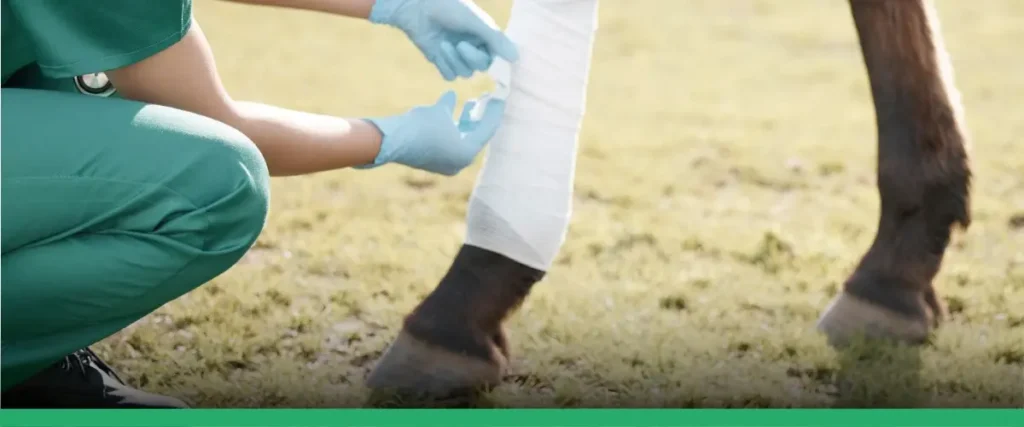
Long before you think about using a healing ointment for your horse, the first step in treating wounds is to remove all external materials that are in the wound and get in the way of healing. Therefore, two processes must be carried out:
The indication of what to apply in a horse wound must be done by the veterinarian. But, in any case, it is interesting that some solutions are present in the stud farm’s pharmacy for use in wound healing and in the recovery of animals, allowing them to return to their activities.
For initial cleaning, Tergenvet® solution can help remove crusts and secretions. As a surfactant, sodiul lauryl sulfate also favors the penetration of other compounds, without harming the tissue. For site antisepsis, preventing wound infection, you can use the antimicrobial solution Furanil®.
In the case of wounds that are already infected, Vetaglós® ointment des an excellent job. Its antimicrobial association is highly effective in combating various microorganisms that may be present in skin lesions. The presence of vitamin A in its composition helps in the maintenance and regeneration of the skin. Urea, in addition to increasing the antimicrobial activity of sulfadiazines, helps in the hydration and removal of substances deposited on the skin.
Finally, to aid the skin regeneration process, Alantol® horse healing ointment can be used. It has, in its composition, two substances that contributeto the recovery of the injury:
Despite the suggestions above, each wound may evolve at different times, and it is important to have the help of a veterinarian to guide which is the best solution to be used in each case. Now go to your neares Vetnil distributor for the best wound management products. The right treatment, given at the right time, can define your champion’s future!
Av. José Nicolau Stabile, 53 – Burck | Louveira – SP – CEP: 13294-100 | vetnil@vetnil.com.br
Copyright © 2025 Vetnil - Partner who Cares | All Rights Reserved

Bem-vindo a Vetnil®
Usamos cookies para
melhorar sua experiência.
Nós guardamos informações técnicas e analíticas do seu acesso e navegação em nosso site.