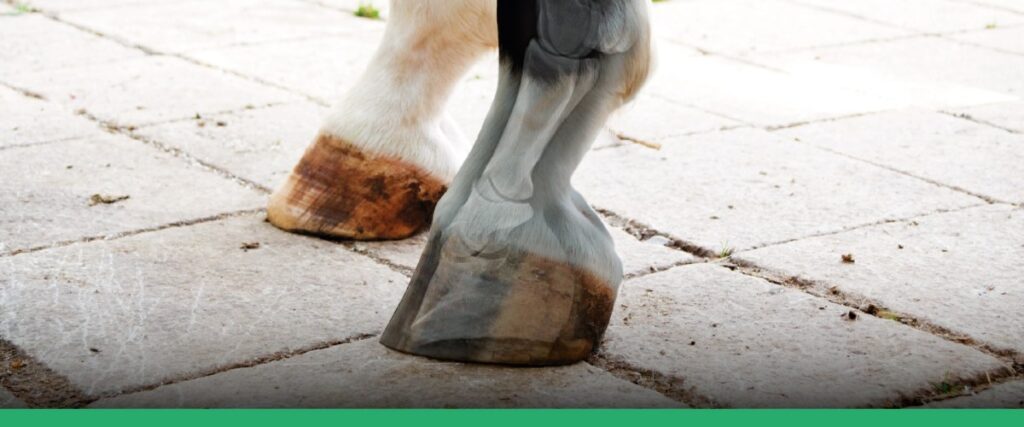
If you horse has been showing difficulty walking or resistance to moving, it’s time to worry. One of the most common locomotor diseases in equines is laminitis, an inflammation of the hoof blades, structures that connect the horn case to the third phalanx.
Understand mor about the condition, learn about the main clinical signs and see how to identify it.
What is laminitis?
Laminitis is a very common locomotor disease in adult horses. This disease is characterized by an inflammation of the hoof blades, structures that connect the horn case to the third phalanx, causing a lot of pain to the affected horses.
What are the clinical signs of laminitis?
The first sign a horse gives when it has laminitis is a reluctance to move. Due to the extreme pain in the sole in the region of the toe, the tendency is to lean on the heels.
So, when the hooves of the forelimbs are affected, it’s common for him to shift the weight to the hind limbs. In cases where all four legs are affected, it is to be expected that he remains lying in a lateral position
In addition, another characteristic of the disease is the high temperature of the hooves due to the inflammatory condition. Other signs that will also be present, but may go unnoticed, are:
- Sinking and/or breakage of the crown line in the region of the toe.
- Strong pulse in the digital arteries.
- Anxiety and muscle tension.
- Pain expression.
- Increase in body temperature and change in vital signs.
-
- Walking like “walking on eggshells”
- In cases of sinking of the third phalanx, approaching the four hooves while standing, resembling “circus elephant”.
- In chronic cases, deformation of the hooves.
- Formation of rings in the wall of the hooves, wider in the region heels and smaller in the region of the claws.
- Bulging of the sole in the region of the toes.
- Breakage of the sole in the shape of a “half-moon” in the region of the toes, between the apex of the frog and the toe.
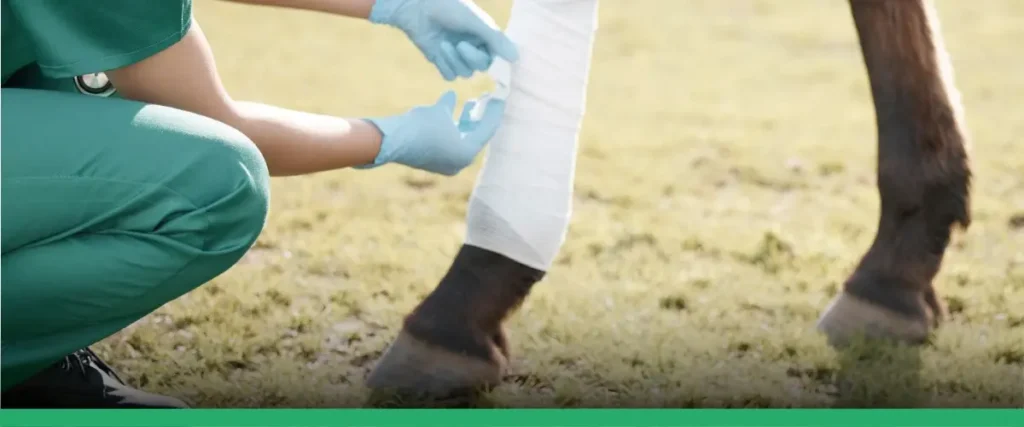
It’s very important that, when any of these signs are observed, as simple as if may seem, the condition is seen as an emergency and the animal owner seeks a veterinarian immediately to investigate the causes and start treatment.
What are the causes of laminitis in horses?
The cause of laminitis in horses are varied and still poorly understood, to be honest. The most common and accepted are:
- High intake of grains – soluble carbohydrates.
- Toxaemia due to bacterial infection.
- Excess weight in one of the limbs when the animal, for some reason, does not distribute it correctly – known as static laminitis – normal in cases of injury or surgery in one of the limbs.
- Retained placenta in mares.
- Concussion of the sole, caused by long walks on hard floors such as asphalt.
- Excessive compression of the sole, caused by poorly placed, ill fitting, or kept too long horseshoe.
- Hoof ischemia due to cold – snow – or excessive heat – due to the floor or the placement of horseshoes.
In addition to these factors, which are mostly external, laminitis can also be developed due to metabolic disorders, which, in general, compromise blood circulation. Examples of factors that can trigger cases like this are:
- Mineral deficiencies involved in the delivery of the placenta.
- Equine Metabolic Syndrome, in obese animals.
- Pituitary gland dysfunction or Cushing’s syndrome, which is more common in older animals.
- Exposure to fertilizers that have nitrate in their composition
How to treat laminitis?
The success of treatment depends on the speed in establishing and eliminating the cause of the disease. It’s essential that the animal’s pain is controlled and that the blood circulation of the hoof returns to normal as soon as possible.
It is the role of the veterinarian establish a prognosis and propose necessary corrections to prevent cases like this from happening again.
Contribution: Veterinarian Mário Duarte (@marioduarte.vet)