Y Filter: learn the correct use of this product in industries
O Y filter It is essential equipment for industries. Common simplified design and practical installation, It guarantees the fluidity of the most varied processes in pipes of different sizes and factories in different segments.
Although, to make the most of its functions and applications, you need to understand how to use it correctly. More than that: It is necessary to have the right model at hand for your activities.
That's why KLINGER has developed a complete content for you to learn everything about the Y filter and transform your processes with this product. Let's go?
What is the function of the Y filter
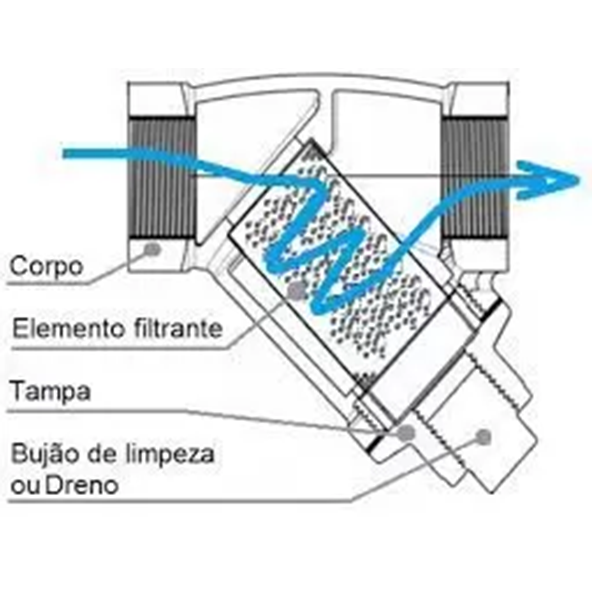
The Y filter is designed to mechanically remove solids and other particles from a fluid line. Consisting of body, filter element, lid and plug or drain, is a essential component in various fluid control applications to ensure that no downstream elements are affected by solid particles.
Y filter design
As the name suggests, The Y filter is shaped like a “Y” and has better flow characteristics than, for example, a T-shaped filter, since the liquid flows through the filter with less change of direction.
Why use a Y filter??
In general, Y filters are essential anywhere they are needed clean fluids.
That's because, although clean fluids can help maximize the reliability and life of any mechanical system, they are especially important with valves. In the end, they are very sensitive to dirt and will only work properly with clean liquids or steam.
Therefore, if any solid enters the flow, it can interrupt and even damage the entire system. Therefore, the Y filter is a great complementary component.
Where to install a Y filter?
In addition to protecting valve performance, Y filters also help preserve other types of mechanical equipment, including:
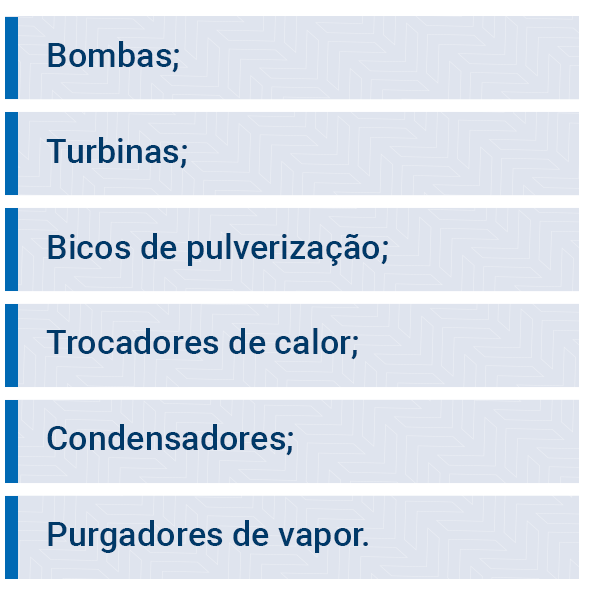
I.e, This is an accessory capable of keeping these equipment, Often considered one of the most valuable parts of piping, protected from the presence of scale, rust, sediment or any other type of foreign debris.
Y filters can be found in different connections, enabling application in any type of industry.
Specifying the filter element
The Y filter would not be able to do its job without the filter element that, in turn, must be specified appropriately.
To find the perfect filter for your project, It is important to understand the basics of mesh and screen sizing. There are two terms used to describe the size of the openings in the filter through which debris passes.. One is the micron and the other is the mesh size.
Although they are two different measures, they describe the same thing. Let's understand.
Meaning micrometer, a micron is a unit of length used to measure tiny particles. For scale, a micrometer is one thousandth of a millimeter or about 25 thousandths of an inch.
A filter mesh with a mesh unit indicates how many openings there are in the mesh in one linear inch. Screens are labeled by that size, therefore, a screen of 14 mesh means you will find 14 openings in a linear inch. Like this, a screen of 140 mesh means there are 140 openings per linear inch.
The more openings per linear inch, smaller the particles that can pass. Ratings may vary from size mesh screen 3 mesh with opening 6.700 microns to a mesh screen 400 mesh com 37 opening microns.
Determining Proper Filter Size
To select the correct filter size for your application, you will need to consider the measure, the scope and environment of the project. Some of the most important factors to evaluate include:

Remember that it is also important to size your mesh filter correctly. A structure that is too small or too large can negatively affect your system as a whole.
For example, if your filter is too small and has too many openings, there will be a greater pressure drop from inlet to outlet. Furthermore, removing too much debris can result in additional maintenance due to debris buildup which can also cause a greater pressure drop.
If it's too big, allowing large particles to pass through, the performance and lifespan of your equipment may be affected.
Y Filter Body Material Options
Now that we've figured out why Y filters are important and what they're used for, Let's discuss some of the different types of Y filters available.
These filters are available in a wide variety of material types and fall into different classes defined by the American National Standards Institute (ANSI).
First, Let's check out the different material housing options available, which include:
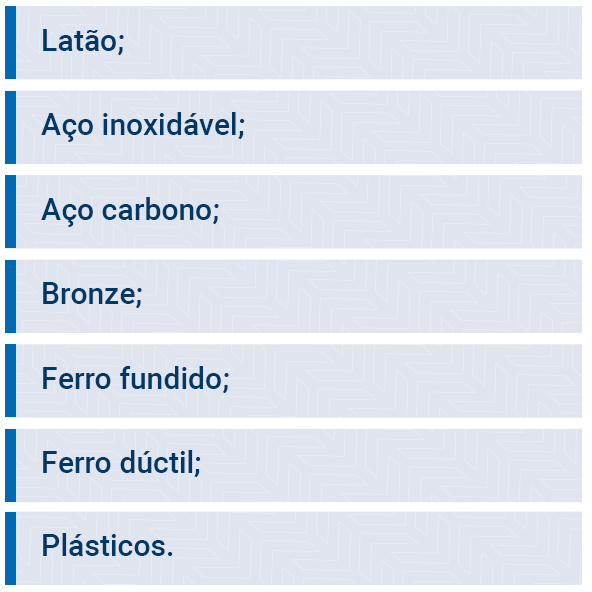
Please note that these different types of body materials are designed to suit certain environments and media., ensuring the versatility of the Y filter.
Y filter selection criteria
There are different types of Y filters on the market and each of them is designed to meet different industry needs.. When researching which is best for your application, keep the following criteria in mind:
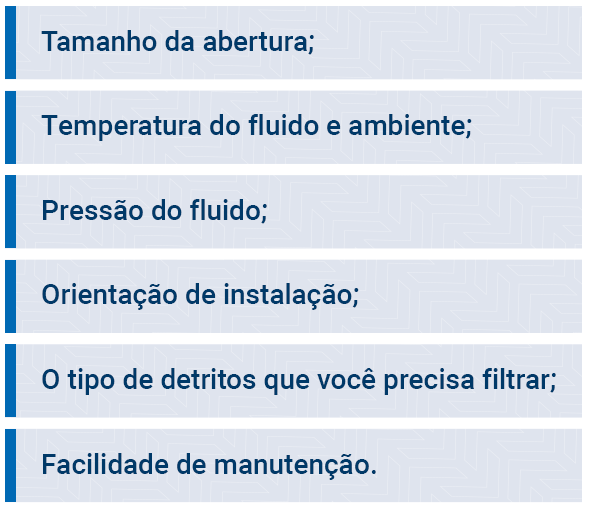
There is no one-size-fits-all Y filter that fits all needs. This is why it is important to understand your application requirements before moving forward..
Typical Y-filter applications
A Y filter is most valuable in an environment that requires constant protection from debris and contamination. Let's analyze some of the most common applications that require its use.
Steam applications
These filters are an essential feature in most steam applications, because its shape is built to deal with the high pressure that exists in these environments.
Liquid applications
Liquid applications tend to infiltrate through sand and gravel. In this scenario, Y filters can help keep these particles out to ensure the liquid stays clean. Especially when working in conjunction with other water handling applications, These devices are capable of protecting important equipment – and expensive – against damage, corrosion or clogging that may result from such contamination.
Natural gas and air applications
Natural gas and air applications tend to have low operating pressure, therefore, Proper sizing is important to reduce pressure drop from inlet to outlet.
Installation
Y filters have an arrow from input to output. It is important to install them in this orientation for proper filtration.
Types of connections
Depending on your needs, Y filters can include a variety of end connections, including flanged, threaded and welded. You can also find special flanges, like ring joints.
What kind of body material should I choose?
Depending on the fluid and piping, a different Y-filter housing material and sealing material must be selected. Make sure you know their chemical resistance to select the appropriate one.
Y filters are affordable?
Sim! This type of filter becomes even more economical as you decrease the size. Whereas it protects more expensive components, It still offers excellent value for money..
Keep expanding your knowledge with KLINGER
With all the information you've seen so far, This article will definitely help you select the suitable Y filter for your application. However, remember that KLINGER remains available to guide and transform your work.
Please feel free to contact our technical support If you have any questions and continue learning more about industrial sealing and all its details and characteristics with more complete and exclusive content like this.