Understand how piston globe valves can help in your industry
In an industrial process, as valves are used to control flow and pressure in pipes that transport liquids, gases, vapors, etc. To this end, We will address here the use of conventional globe valve models and also piston globe valves.
Conventional Globe Valve
Widely used in industrial processes for fluid flow control and pressure regulation, This type of valve is characterized by its globe-shaped body.
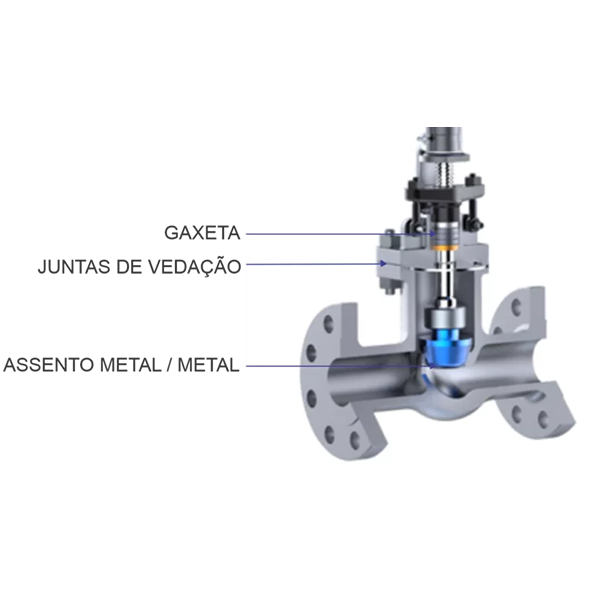
Conventional Globe valves use gaskets as sealing elements. This type of material offers reliability and is recommended for a wide range of industrial applications..
Although, the use of gaskets in globe valves develops recurrent leaks and replacement of this material is necessary. This gasket change is made difficult by access to it and also by the need to depressurize the entire line., since this maintenance must be done without any pressure on the valve.
This type of valve also uses sealing gasket between the body and the castle. This type of seal may leak and, sometimes, results in erosion of sealing surfaces, being necessary to replace damaged parts.
Considering that globe valves also use internal metal seals,, leaks may occur, then, considering that this type of seal falls into class IV, dripping is allowed. Furthermore, considering that this type of seal does not have perfect contact, Dirt may accumulate on the sealing surface and erosion of these surfaces may occur..
It is important to highlight that, any loss of steam must be analyzed and corrected, because it means wasting time, of operation and also of money.
Loss of vapor through leakage to the atmosphere (kg per hour)
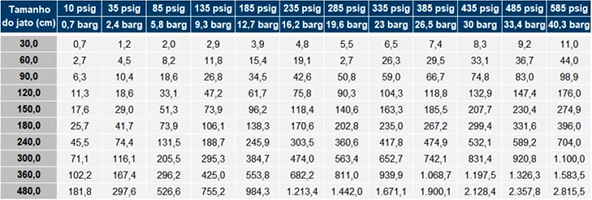
SOURCE: UTILITY LEAK PREVENTION
*STEAM JETS ARE MEASURED IN LENGTH ONLY
Considering the table above, which relates the size of the leak jet to the maximum steam flow, If we take as an example a line pressure 9,3 bar and a leaking jet of steam 90 cm, steam loss will be 26,8 kg/h approximately.
Also considering the operating time: 24h/him; 30 dias / month, the total steam lost per month will be 19,3 tons.
Assuming a cost of R$ 60,00 per ton, the total lost will be R$ 1.157,76 per month.
The warning point in the case of the conventional globe valve is that, All these setbacks result in high maintenance costs, waste of inputs and unwanted production stops, considerably compromising the cost-benefit ratio of using these valves.
Piston Globe Valves
Piston Globe valves, in turn, feature cost-benefit ratio that makes investment viable.
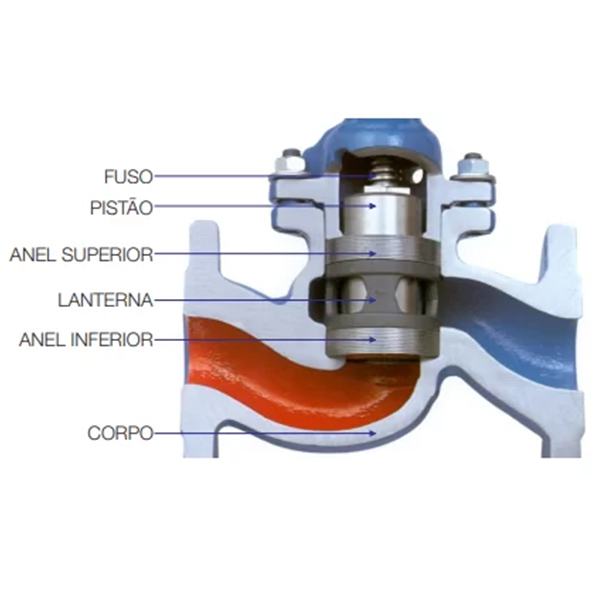
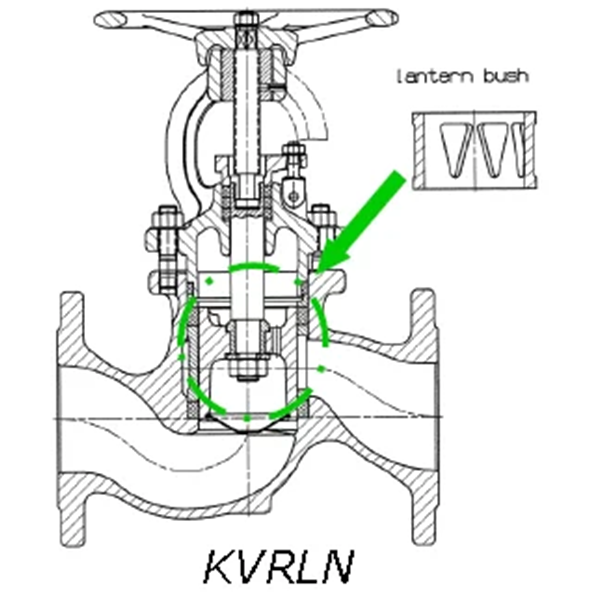
The piston valve sealing system is carried out using graphite rings that are in contact with the piston.. This type of seal, class VI, guarantees tightness for both the line and the atmosphere.
The exclusive sealing system of KLINGER piston valves ensures Class VI sealing according to ANSI/FCI70-21 Standards, referring to the passage of fluid to the line.
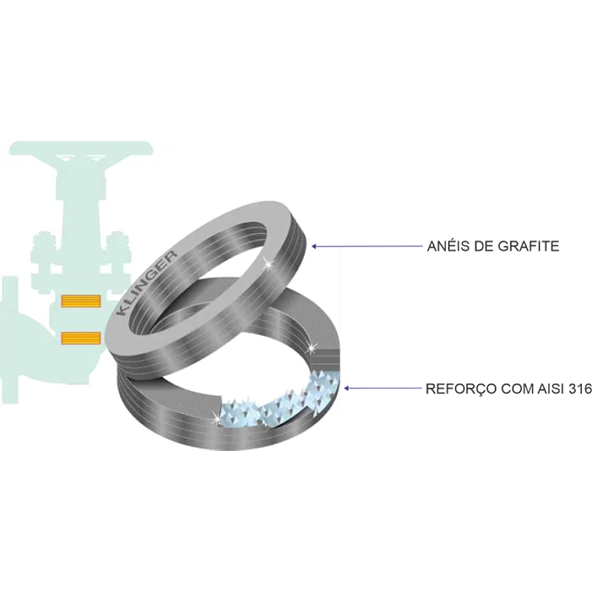 The efficiency of these graphite rings This is achieved through the insertion of expanded stainless steel sheets and the special physical properties of graphite that allow it to be used at temperatures from -40ºC to 400ºC, being suitable for thermal shocks and vapor change / condensed.
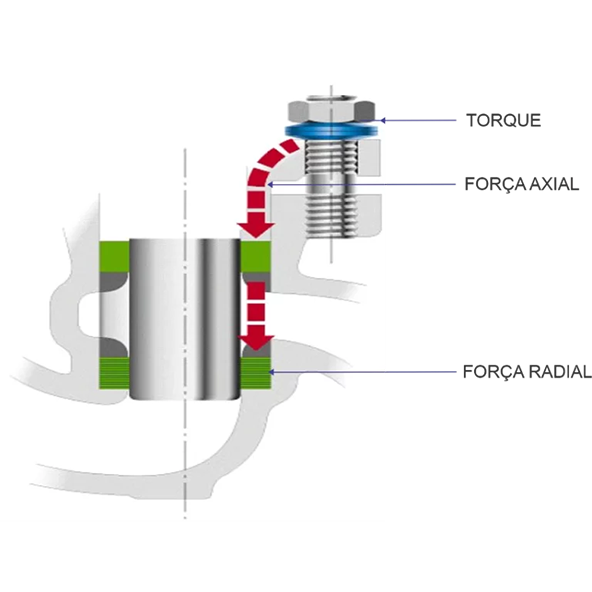 This seal is based on the contact between the piston (plug) and the inner surface of the rings, and contact with the lower ring (site) blocks the flow to the pipe and contact with the upper ring seals it to the atmosphere. Precisely this contact between the piston and the upper ring replaces the gaskets and bonnet sealing joints., that are used in conventional valves.
Piston valves are low maintenance, because normally, it is only necessary to replace the sealing rings, items that cost approximately 5% the cost of the valve. Maintenance is also easier, since the valve can be repaired by keeping the body installed in the pipeline.
Considering the presented characteristics of piston valves, it can be said that This type of valve offers greater reliability against accidents caused by leaks.
Keep image
Furthermore, Savings on energy and other inputs inherent to the process result in irrefutable cost-benefit.
Plus steam and condensate collection systems, the KLINGER piston valve has proven effectiveness in applications such as thermal fluids up to 350°C, chemical fluids (stainless steel version) e gases.
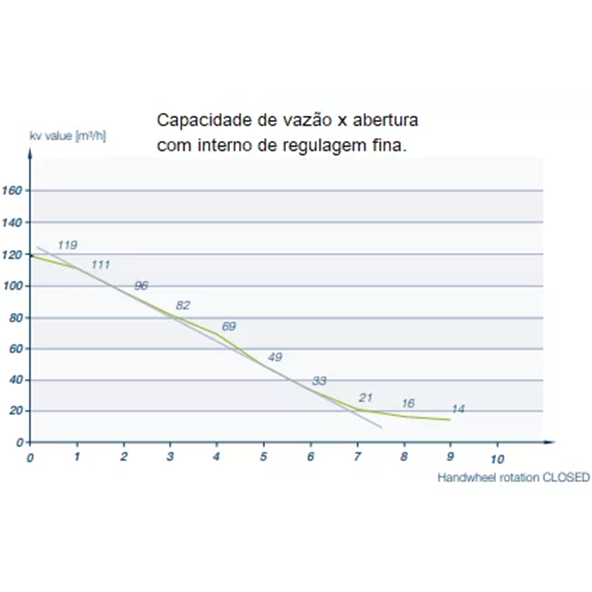
This type of valve, It is also available with a special internal part for fine adjustment. However, This feature is exclusive to the KLINGER piston valve.
Learn more about valve components
Piston globe valves use materials applied to the seal, to guarantee the enjoyment of substances, but with the total safety of industrial sealing so that fluids are not lost.
Here at our website, do you know the different types, application sites and also information about this and other components used in the industry for sealing, fluid monitoring and control.
And no Linkedin da KLINGER Brazil, It is possible to follow news in the segment, more information about products, What type of material to use? and other content under control, fluid monitoring and sealing.